Everything About Hair Transplantation
Hair loss affects many people in the Netherlands. Over 40% of women experience hair thinning or baldness at some point. Men also frequently struggle with this issue. A hair transplant offers a permanent solution for bald spots.
Summary
- A hair transplant provides a lasting solution for hair loss by moving hair follicles from the back of the head to bald areas.
- The FUE technique is the most commonly used method and leaves no visible scars, while the older FUT method can leave a scar of 20–30 cm.
- Costs range from €2,000 to €10,000, depending on the number of grafts (1,000 to 4,600) needed.
- Full results become visible after 12–14 months, with initial hair growth starting after 2–4 months.
- Around 40% of Dutch women and 70% of men experience hair loss, but not everyone is a suitable candidate for hair transplantation.

What Is a Hair Transplant?
A hair transplant is a surgical procedure in which hair follicles are moved from a donor area to bald or thinning areas. The doctor harvests healthy follicles—usually from the back of your head—and implants them in areas affected by hair loss.
This technique provides a safe and permanent solution to hair loss. The transplanted hairs are immune to dihydrotestosterone (DHT), the hormone that causes hair loss in androgenetic alopecia.
Since the procedure uses your own hair roots, the result looks natural and is long-lasting. The new follicles grow just like your original hair. Depending on your specific case, you can choose between different techniques such as FUE or FUT.
It takes a few months after treatment before the full hair growth is visible.
Pros and Cons
Pros hair transplantations:
- The transplanted hair will continue to grow for a lifetime.
- You can treat it like your own hair—wash it, style it, and comb it freely.
Cons hair transplantations:
- The procedure can be expensive.
- Hair density may never fully match what it used to be. However, optical density can be improved using camouflage products or Micro Hair Pigmentation.
- If the donor area contains enough healthy hair, a second or even third treatment may be performed to achieve greater density.
FUE Hair Transplant
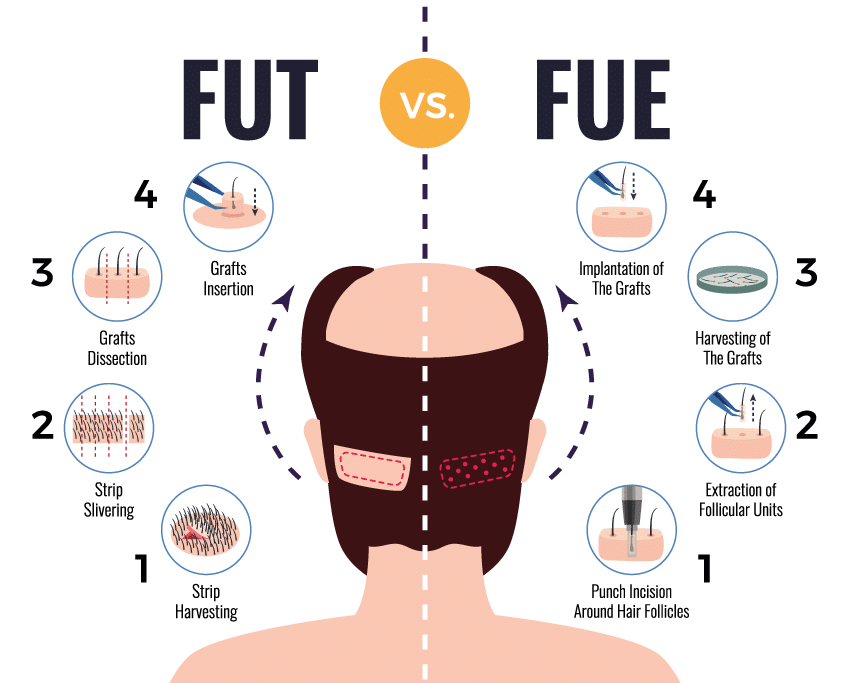
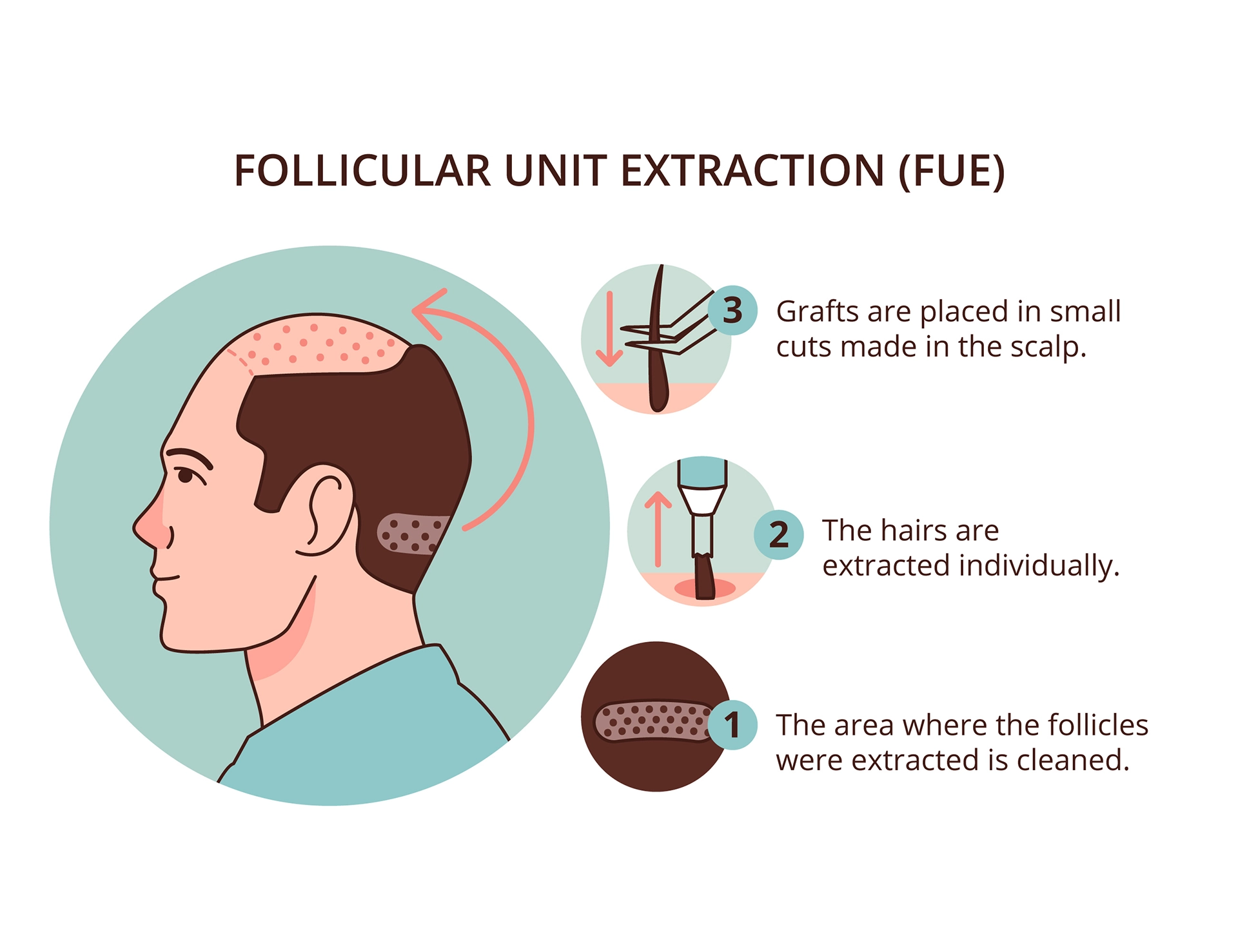
The most modern method (FUE – Follicular Unit Extraction) involves removing hair follicles one by one from the back of the head using a small hollow needle or drill, as shown in the image below.
In the FUE technique, grafts are transplanted from the hair ring (donor area) to another area—or multiple areas—of the scalp. The procedure is performed using a fine hollow needle or micro drill.
The donor area is typically at the back of the head, where the hairs are not affected by genetic hair loss. When these hairs are relocated to bald areas like the crown, hairline, or temples, they retain their original genetic properties. Thanks to this method, hair can start to grow again in previously bald areas.
Today, some clinics can transplant more than 2,000 grafts per day using the FUE method. To transplant enough hair, multiple treatment days may be required.
FUT Hair Transplant
An older technique is the FUT method (Follicular Unit Transplantation). This technique is used less frequently today, as it can leave a noticeable scar on the back of the head.
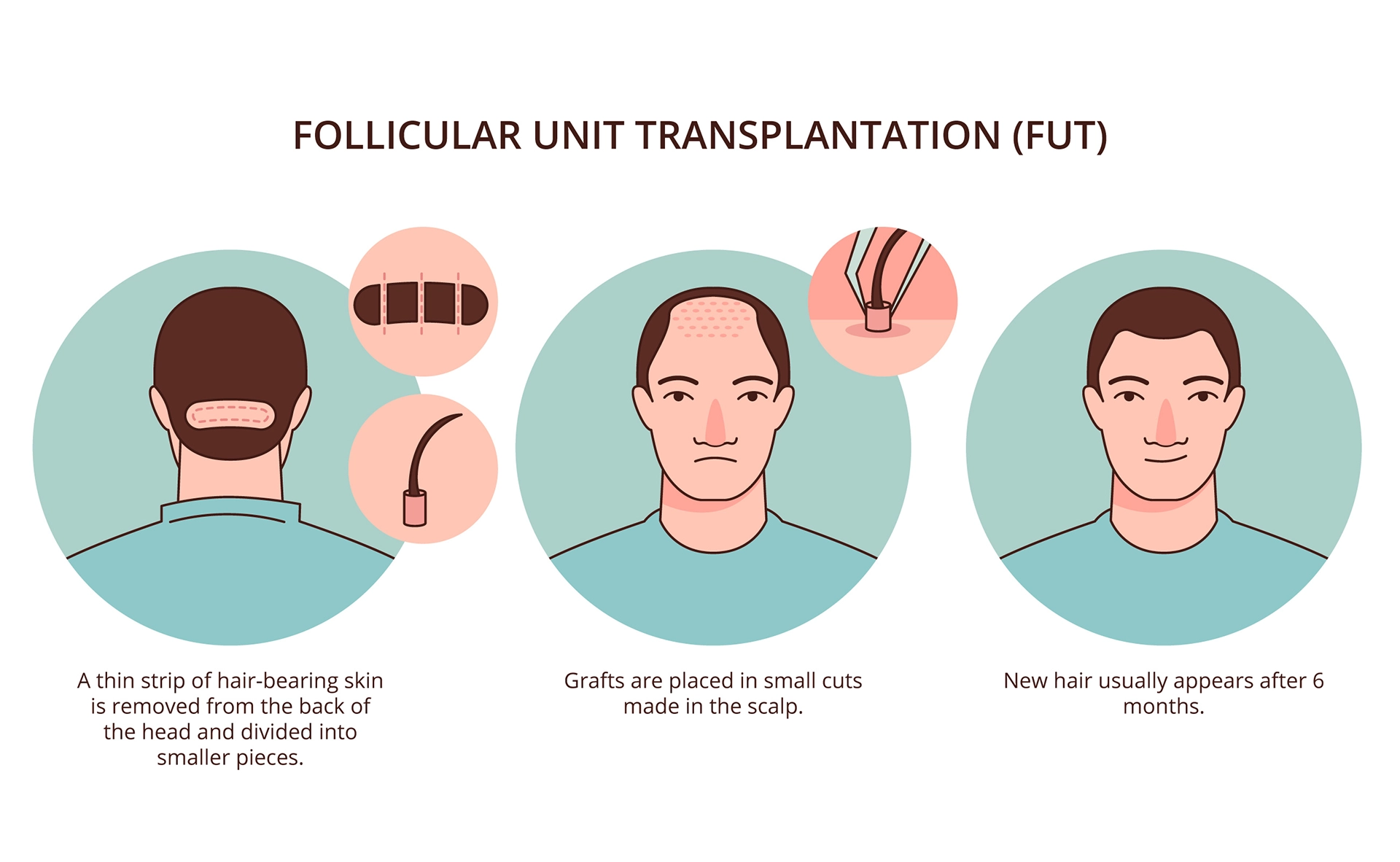
With this method, a strip of skin containing hair is removed from the donor area, usually the back of the head where hair is genetically resistant to balding. The size of the strip varies, but it typically measures around 1 centimeter in width. For 1,000 grafts, around 5 to 7 cm² is required, as there are between 150 and 200 hairs per cm².
Once the strip is removed, the scalp is stitched. If the hair is long, it will cover the scar, but with buzzed hair, the scar will remain visible. When clinics claim to offer a “scarless hair transplant,” this can be misleading—FUT always leaves a scar, although it may be concealed by surrounding hair. In some cases, if surrounding hair is lost, the scar becomes more visible, making buzzed hairstyles undesirable.
The removed strip is divided into individual grafts using specialized blades. Each graft typically contains 1 to 3 hair follicles.
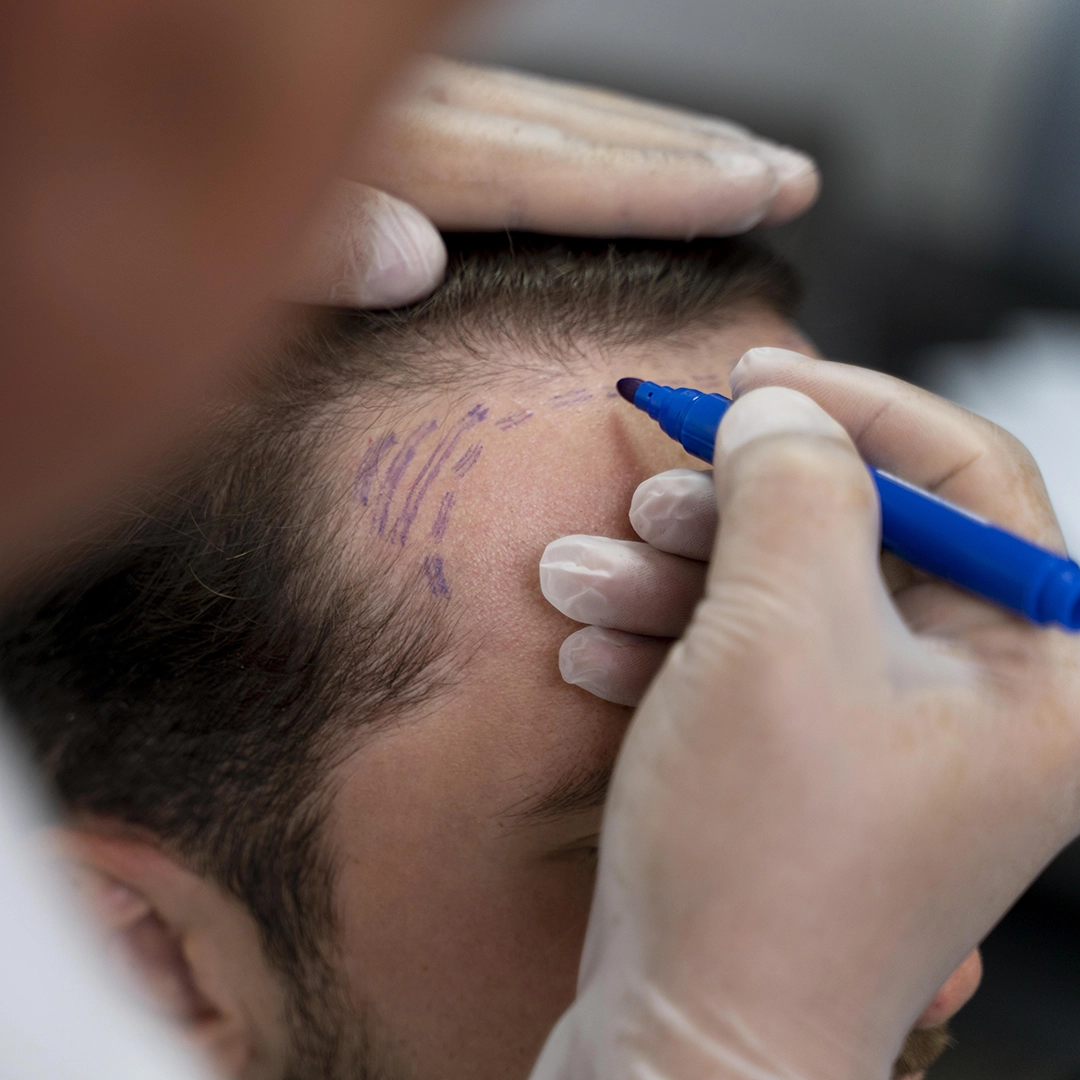
The hairline is determined in consultation with the patient before treatment. Once the areas for implantation are prepared, local anesthesia is applied, and small incisions are made where the grafts will be placed. Single or double-hair grafts are used for the hairline, while multi-hair grafts are used behind it. Grafts at the front are placed closer together for a more natural look.
10 Factors That Determine Whether You’re a Good Candidate for a Hair Transplant
The likelihood of a successful hair transplant and achieving a pleasing result is key when considering the procedure. It’s important to determine if you’re a suitable candidate before undergoing a transplant.
Here are 10 factors that influence your candidacy:
- Realistic expectations
You should have realistic expectations. At age 50, expecting a teenager’s hairline is neither achievable nor natural-looking. - Stage of hair loss
If your hair loss has just begun, it’s wise to wait and observe how it develops. - Age suitability
It’s generally not recommended for younger people to undergo a transplant. Early procedures can necessitate further sessions as hair loss continues. If you’re under 22, it’s better to wait a few years. The ideal age range is between 25 and 60. - Donor hair quality and quantity
Candidates with a good supply of strong donor hair are more eligible. If donor hair is sparse or weak, it may need treatment before transplanting. - Overall health
A transplant is still a surgical procedure (FUT is more invasive than FUE). Health issues can impair wound healing and affect recovery. - Hair loss progression despite medication
If you can’t control hair loss with medications, a transplant may be a considered option. It’s prudent to exhaust other treatments first. - Men with confirmed androgenetic hair loss
Men who are balding over time and have diagnosed hereditary hair loss are good candidates. - Hair loss due to surgery
Both men and women who’ve lost hair or had a raised hairline due to procedures (such as eyebrow or facelift surgery) may be suitable candidates. - Hair loss from injury
Individuals who’ve lost hair due to trauma, like burns, often benefit from a hair transplant. - Scalp health and elasticity
Good scalp health and skin elasticity aid surgeons, especially with FUT/strip methods.
If you believe you’re a suitable candidate, choosing a reputable clinic is essential for optimal results.
Who is less suitable for a hair transplant?
- Those with low donor hair density—not enough hair to transplant.
- Individuals with light, thin, straight hair are less ideal than those with dark, thick, slightly curly hair, which offers better coverage.
3 Hair Density Options
- Light Density
Suitable for those who are satisfied with reasonable coverage—usually one procedure is enough. - Medium Density
If full coverage is desired, two sessions may be required. New grafts are placed no sooner than 9 months after the first transplant. - High Density
For maximum results, up to three sessions may be performed, depending on available donor hair. Again, repeats occur no sooner than 9 months apart. It’s often recommended to take finasteride after transplantation to maintain results—otherwise hair loss may continue, leaving transplanted areas isolated.
Advantages of a Hair Transplant
- Once healed, you can resume your normal life. Aside from checkups in the year following the procedure, no ongoing care is needed—it’s your own hair, just relocated.
- The transplanted hair grows for life and can be treated like your natural hair (washed, styled, etc.).
Disadvantages of a Hair Transplant
- Hair will never be denser than it originally was since no new follicles are added—rather, they’re redistributed.
- Not everyone qualifies: sufficient donor hair is essential, considering both current and future loss.
- Donor hair must have enough density; widely spaced hair risks graft shortage.
- It’s not cheap—but you do get permanent, natural hair.
Possible Side Effects
- Infection: Any invasive procedure carries this risk, though the scalp is well-vascularized, making infections uncommon.
- Ingrown hairs/pimples: These may appear 3–4 months post-op. Usually self-resolving, but consult your surgeon if needed.
- Swelling: Especially at the front—fluids can accumulate. Gentle massage toward the temples or applying ice packs can help. This typically subsides within a few days.
- Temporary numbness at the donor site on the back of the head can occur. This also usually resolves over time.
The Frêchet-Extender Method
Unlike FUE and FUT, the Frêchet-extender doesn’t transplant hair—it reduces the balding area by stretching surrounding scalp. Named after French surgeon Dr. Frêchet, this method works as follows:
- A device resembling a retaining band is implanted under the scalp around the bald patch.
- Over about 30 days, it gradually contracts, expanding the adjacent hair-bearing skin.
- In a second session, excess skin is removed, letting the stretched, hair-covered skin fill in the bald area.
- This redistributes existing hair without transplanting follicles. Any small scars formed can later be treated with FUE or FUT transplant.
Latest Development: Hair Stem Cell Transplantation
The Hair Stem Cell Transplantation procedure includes several steps:
- The donor area is shaved and anesthetized using an impregnation device—no needles or high-pressure injections.
- The scalp is infused with anesthetic solution, fully numbing the area within 10 minutes.
- Tiny grafts containing hair follicles are extracted using a precision 0.5 to 0.6 mm needle.
- The same device creates minuscule recipient sites.
- Grafts are implanted one by one into these sites.
- Because only a small portion of the follicle is removed, the donor area regenerates.
Other Considerations
- Shock Loss: This phenomenon may occur post-transplant, where hair in the transplant or donor areas sheds due to “shock.” It typically regrows within 3–6 months.
- Budget Clinics Abroad: Many companies in countries like Turkey, Hungary, and Poland offer cheaper hair transplants. Quality varies widely—some patients are satisfied, others dissatisfied. Always research thoroughly, read reviews, and consult multiple sources before choosing.
Frequently Asked Questions About Hair Transplantations
Frequently Asked Questions About Hair Transplantations
1. What is a hair transplant?
A hair transplant involves removing existing hair follicles from the donor area—usually the back of your scalp—and transplanting them to areas with thinning or no hair. The harvested follicles, also called grafts or hair implants, are relocated to the balding areas. The results are natural and permanent.
2. Am I a suitable candidate for a hair transplant?
Many men and women qualify for a hair transplant. You need to have a healthy donor area with sufficient hair. If your hair loss is due to an underlying illness or medication, a different treatment is usually recommended. Be realistic about your expectations; depending on the level of baldness, full density may not be achievable. A hair clinic will advise you on your specific options.
3. What does a hair transplant involve?
A hair transplant can be performed using various techniques. The scalp is locally anesthetized, and a predetermined number of grafts are harvested from the donor area. After checking the quality, the follicles are implanted into the recipient areas. It’s an intensive procedure that requires precision and may take several hours. In some cases, it may be spread over multiple days.
4. What can I expect after a hair transplant?
You can recover at home after the procedure. During the first five days, it’s visible that you’ve undergone a hair transplant: your scalp may show red spots and small scabs. The skin heals within 7 to 14 days, after which the procedure is no longer visibly noticeable. The clinic will give you instructions and aftercare advice to support your recovery. Following these instructions is essential for achieving a positive result.
5. What results can I expect from a hair transplant?
The specialist will aim for the best possible outcome with you. On average, the transplanted hairs shed 2 to 3 weeks after the procedure, which is completely normal. Hair starts to regrow after 2 to 3 months. The final result is visible after 9 to 12 months. The outcome is natural-looking and permanent.
6. Will a hair transplant leave visible scars?
This depends on the technique used. FUT (Strip) leaves a linear scar at the back of the head, while FUE results in small white dots that are barely visible later. Be sure to ask about scarring with your chosen method.
7. Is a hair transplant painful?
Both FUT and FUE are performed under local anesthesia, so you’ll feel very little. Any discomfort afterward varies per person and technique. FUT generally causes more post-operative pain than FUE. Pain usually subsides within a few days and can be managed with painkillers such as paracetamol.
8. Can I influence the final result of the treatment?
Yes. By preparing well and following your doctor’s instructions after the procedure, you can positively influence the outcome. Avoid heavy physical activity and direct sunlight in the first weeks. Also avoid saunas and intense sports. Gradually resume daily activities, and choose a reputable clinic for the best results.
9. What are the advantages of a hair transplant?
A hair transplant permanently resolves baldness using your own donor hair. It provides natural and lasting results. You can style and care for your hair as usual afterward.
10. What are the disadvantages of a hair transplant?
It’s an intensive and time-consuming procedure and can be quite costly. If your expectations aren’t realistic, you may feel disappointed afterward. Complications such as bleeding, reduced sensation, infection, or scarring are possible. A poorly performed procedure may require correction or repeat treatment.
11. Can a hair transplant be done under general anesthesia?
No. The procedure is performed with local anesthesia. This method has proven effective and safe. Any discomfort can be managed with painkillers.
12. How long does a hair transplant take?
The duration varies per individual, depending on the size of the treatment area and number of grafts. On average, it lasts 4 to 8 hours. Complex treatments may be divided across multiple sessions.
13. What are alternatives to a hair transplant?
If you’re not ready for surgery or not a suitable candidate, your doctor may recommend alternatives such as:
- Scalp Micropigmentation (SMP) for advanced hair loss.
- Wigs or hairpieces.
- Proven hair growth products, especially for early-stage hair loss.
Choose the option that best suits you.
14. When are hair transplant results optimal?
A hair transplant doesn’t give immediate results. Hair starts to grow in the months after treatment. Final results are usually seen between 9 and 12 months.
15. What does a hair transplant cost?
Costs vary per clinic and depend on the method used and the number of grafts transplanted. Request quotes from multiple clinics to compare your options.
16. Are hair transplant costs covered by insurance?
Cosmetic hair transplants are generally not covered by health insurance. In rare cases, partial reimbursement is possible if there is psychological suffering, illness, or hair loss caused by trauma. Proof is required. Check your policy or contact your insurer for more details.
17. Are hair transplants suitable for women?
Yes. Women also experience hair loss and balding. Most are treated using the FUE method, which often doesn’t require shaving the entire head—only a small donor area. If surrounding hair is long, it can cover this area post-treatment. Schedule a consultation to find out if a hair transplant is right for you.
18. What are the risks of a hair transplant?
As with any cosmetic procedure, there are risks such as bleeding, infection, scarring, or allergic reaction to anesthesia. However, complications are rare.
19. How many grafts are transplanted during a treatment?
The number varies per person and depends on the desired result. A specialist will assess your scalp and estimate how many grafts are needed for optimal coverage.
20. How long does a hair transplant last?
Transplanted hairs last a lifetime, as they retain the characteristics of the donor area and are not affected by DHT (the hormone responsible for androgenetic alopecia). However, your hair will still age naturally and may thin over time.
21. How do I choose the best hair clinic?
Choose a clinic where you feel welcome and understood. Compare experience—not just of the doctor, but the entire team involved in the procedure. Teamwork is essential for a successful outcome.
22. When can a hair transplant not be performed?
Your suitability is determined by a qualified hair transplant specialist. If your baldness is due to an active illness, medication, or you lack sufficient donor hair, you may not be a candidate.
23. Can a hair transplant be performed at a young age?
Hereditary hair loss can start at a young age. In some cases, individuals lose a significant amount of hair before or around the age of 20. If you are healthy, there is generally no medical issue with opting for hair implants. An experienced hair transplant specialist will be happy to discuss the possibilities and long-term expectations with you.
24. How can I prepare for a hair transplant?
Hair transplant procedures are performed under local anesthesia, not general anesthesia. You may have a normal breakfast before the procedure. Depending on the type of transplant, you may need to shave your hair short. If this is difficult for you, it can often be done at the clinic shortly before the procedure. Make sure to arrive on time so you can sit as relaxed as possible in the treatment chair. Always follow the pre-procedure instructions carefully.
25. What does my head look like after a hair transplant?
Especially during the first five days after the procedure, it’s noticeable that you’ve had a hair transplant. Small red dots will appear across the treated area. These will gradually fade after five days. The speed of healing varies per individual. Typically, after two weeks, there will be no visible signs of the procedure.
26. Can I go abroad for a hair transplant?
Yes. In the Netherlands, several foreign hair transplant providers are active. Some of these clinics have a Dutch contact point where you can go for a consultation and sometimes for aftercare. Compare local and international providers carefully, and don’t forget to consider travel and accommodation costs.
27. Can I get a discount on a hair transplant?
A hair transplant is an expensive procedure. By comparing prices carefully, you may be able to save significantly. Sometimes, discounts are offered if you are flexible with scheduling. You can always ask about possible discounts during the consultation.
28. Is a hair transplant suitable for the beard area?
Yes. Hair transplant techniques can also be used to enhance beard density. As with scalp transplants, you must have sufficient donor material. The number of grafts required for a beard transplant is usually lower than for a full hair transplant. The procedure follows the same principles and is done under local anesthesia. Results take a few months to appear and are permanent.
29. Can a hair transplant use donor material from someone else?
No. The success of a hair transplant largely depends on the fact that your body’s own donor material is almost never rejected. It’s not possible to use donor hair from someone else.
30. How many treatments are needed for a natural result?
It’s important to be aware that more than one transplant may be needed to achieve and maintain the desired result. Especially individuals who undergo a first transplant at a young age may require additional procedures years later, as it’s difficult to predict how surrounding hair will behave over time.
31. Why do hair transplants provide permanent results?
The hair used in the procedure comes from your “donor area,” which has a different structure and genetic makeup than the rest of your scalp. This hair is not sensitive to the hormone dihydrotestosterone (DHT), which causes androgenetic alopecia. Transplanted hair follicles retain these characteristics even after being relocated.
32. Will I have a full head of hair immediately after a transplant?
No. In the weeks following the procedure, the transplanted hairs will first fall out. New hair growth typically becomes visible three to four months after the transplant. It can take up to 12 months to see the final result. Don’t expect a full, lush head of hair like you may have had in your youth.
33. Do I need to shave my head before a hair transplant?
Most men undergoing an FUE transplant are asked to shave their hair beforehand to make the procedure easier for the specialist. Women often opt for a “shave-free” transplant, where only a small section of the donor area is trimmed. After the procedure, longer surrounding hair can cover the trimmed area.
34. Why are more grafts transplanted abroad than in the Netherlands?
Many foreign clinics work with certified hair surgeons and experienced assistants. This collaboration allows them to transplant significantly more grafts in a single session.
35. Is a hair transplant possible with afro-textured hair?
Yes. Some clinics and doctors specialize in transplanting afro-textured hair. This is a more intensive procedure requiring special expertise, as curly hair also curls beneath the skin. For a natural result, it’s essential to implant hairs in the correct growth direction. Note that success rates for afro-textured hair are often lower than for straight or slightly wavy hair.
36. Can a hair transplant fail?
Hair transplants rarely fail. However, results can sometimes be disappointing. Much depends on your expectations beforehand. Experienced specialists spend time discussing your wishes and will adjust them if necessary to what’s realistically achievable.
37. Can a hair transplant be done twice?
Some individuals may want to increase density or address a different balding area after their first transplant. A second transplant is possible depending on available donor material and your overall health. Typically, up to 5,000 grafts can be harvested from a healthy donor area without causing noticeable thinning.
38. How long will my scalp stay red after a hair transplant?
Redness and scabbing usually disappear within 7 to 10 days, though this depends on your skin type and how your body heals.
39. Why does my hair fall out after a hair transplant?
It’s normal for transplanted hairs to fall out three to four weeks after the procedure. This is a natural response to the harvesting and implantation process. Only the hairs fall out— not the follicles. New growth begins after about three to four months.
40. When can I touch my scalp again?
After two to three days, you can gently touch the grafts with your fingertips. Be careful not to scratch the skin with your nails. Try to avoid disturbing the scalp and transplanted hairs as much as possible in the early days.
41. Can I speed up hair growth after a transplant?
No, natural hair growth cannot be accelerated. Healthy hair grows about 1 cm per month, which is why final results are only assessed after a year.
42. Do I need to sleep upright after a transplant?
No, but it’s recommended to sleep with an extra pillow for the first few nights.
43. Do I need to follow a special diet after a hair transplant?
No, although your specialist may recommend foods rich in vitamin B to support recovery.
44. Does sweating affect the results of a hair transplant?
Excessive sweating should be avoided in the first few days. Still, sweating doesn’t usually harm the results. Follow your specialist’s instructions carefully.
45. Can I drink alcohol after a hair transplant?
It’s advised not to drink alcohol during the first few weeks after the transplant. Give your body time to heal for the best outcome.
46. Can I fly after a hair transplant?
Yes, flying doesn’t negatively impact the results. The same applies to travel by train, car, or boat. Just be careful not to bump your head or expose it to unnecessary pressure.
47. How long does it take for the hair follicles to anchor?
Transplanted follicles usually anchor within a few days. Be extra careful not to bump your head for at least two weeks.